
Solving a Renaissance Mystery: How Ancient DNA Debunked the Medici Poisoning Theory
For centuries, the sudden death of Grand Duke Francesco I de’ Medici, the Renaissance ruler of Tuscany, was shrouded in conspiracy. Dying in 1587, just one day after his wife, Bianca Cappello, Francesco’s passing sparked endless rumors of a cold-blooded assassination. The prime suspect? His own brother and rival, Cardinal Ferdinando de’ Medici, who was whispered to have used arsenic to clear his path to power.
However, thanks to the cutting-edge field of ancient DNA analysis, scientists have finally replaced folklore with forensic fact.
The Science Behind the Secret
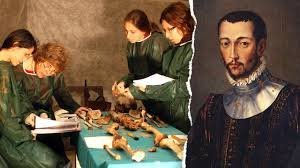
Researchers from Yale University, collaborating with paleopathologists from the University of Pisa, decided to look deeper into the skeletal remains of the Medici brothers. By extracting genetic material from the ribs of Francesco I and his younger brother, Giovanni—who had died 25 years earlier—the team sought to identify the biological markers of the illnesses that plagued them.
The results, published in the journal iScience, provided a definitive answer. The researchers discovered molecular traces of Plasmodium falciparum, the parasite responsible for the deadliest form of malaria.
Debunking the Poisoning Myth
While historical archives mentioned “febbre terzana” (tertian fever)—a common term for malaria in Central Italy at the time—the lack of scientific proof allowed the poisoning theory to persist for over 400 years. The new genomic evidence changes everything:
- n
- Genetic Confirmation: Ancient DNA confirmed the presence of P. falciparum in both Francesco and Giovanni.
- Dual Infection: Francesco’s remains also showed traces of a second species, P. malariae.
- Environmental Context: The couple had stayed at a mosquito-infested villa shortly before falling ill, providing a clear transmission route.
While the researchers cannot 100% rule out every possible secondary factor, they emphasize that the hypothesis of poisoning is purely speculative and lacks scientific support compared to the overwhelming evidence of malaria.
Why Ancient DNA Matters Today
This breakthrough is about more than just clearing the name of a long-dead Cardinal. The study of ancient DNA offers invaluable insights into the evolution of human pathogens. By identifying a novel strain of the malaria parasite from the 16th century, scientists can better understand how Plasmodium falciparum has mutated over time.
“Using historical specimens can not only help us understand our past better, but it can also help build a better future,” noted the research team.
Understanding the evolutionary trajectory of these parasites allows modern medicine to develop more effective control methods and models to combat malaria in the present day. As genomic-based approaches continue to evolve, many more historical mysteries—from the fall of empires to the deaths of royalty—may soon be solved.



