
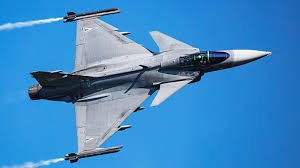
Saab JAS 39 Gripen: The Agile Powerhouse of Modern Air Combat
In the high-stakes world of aerial warfare, versatility and efficiency are the keys to dominance. Enter the Saab JAS 39 Gripen, a multi-role fighter jet that has consistently punched above its weight class. From the frozen landscapes of Scandinavia to the tropical climates of Southeast Asia, the Gripen has established itself as one of the most adaptable aircraft in the sky.
A Global Footprint and a Strategic Shift to Ukraine
Currently, the Saab JAS 39 Gripen is the backbone of several air forces, including those of Sweden, Hungary, the Czech Republic, South Africa, Brazil, and Thailand. However, the spotlight has recently shifted toward Eastern Europe. Thanks to strategic support from the European Union, the Ukrainian Air Force is set to bolster its fleet with 20 new Gripens, complemented by 16 older models donated by Sweden.
This deployment is particularly significant as it is widely expected that these aircraft will engage in direct combat operations. For the Gripen, this represents a pivotal moment in its operational history, putting its advanced capabilities to the ultimate test against Russian aerial defences.
Combat History and NATO Interoperability
Since entering service with the Swedish Air Force in 1996, the JAS 39 was engineered with NATO interoperability at its core. While it has participated in numerous NATO missions, its actual combat record is lean but impactful. A notable instance occurred recently during hostilities between Thailand and Cambodia in 2025. The Royal Thai Air Force utilized two Gripens alongside F-16s to execute precision airstrikes, employing Mk 82-class bombs equipped with GPS-guided kits to neutralize artillery targets.
But what does “JAS” actually mean? For those curious, the acronym stands for Jakt (Air-to-air), Attack (Air-to-surface), and Spaning (Reconnaissance), perfectly encapsulating the aircraft’s multi-mission nature.
The Evolution: The Gripen E
The aircraft has not remained static. The latest iteration, the Gripen E, represents a quantum leap in technology. This version boasts:
- n
- Enhanced Propulsion: A more powerful engine for superior climb rates and speed.
- Extended Range: Increased fuel capacity for longer mission endurance.
- Next-Gen Avionics: Advanced communications and cutting-edge electronic warfare (EW) suites to jam enemy radar and evade detection.
As of mid-2026, Saab reported 117 fighters in its order books, with plans to scale production from 15 to as many as 30 aircraft annually across its Swedish and Brazilian production lines.
Engineered for Resilience and Efficiency
What truly sets the Saab JAS 39 Gripen apart is its “battlefield logic.” Unlike many luxury fighters that require pristine runways and massive ground crews, the Gripen is built for the grit of real war:
- n
- Road-Base Capability: It can take off and land on ordinary stretches of straight road, allowing it to be dispersed and hidden in the countryside to avoid preemptive strikes.
- Extreme Weather Readiness: All maintenance procedures are designed to be performed while wearing gloves, a critical feature for the freezing winters of Ukraine.
- Rapid Turnaround: A lean crew of six can rearm and refuel a Gripen in under 10 minutes.
- Cost-Effectiveness: It operates at a fraction of the hourly cost of an F-35, making it a sustainable choice for nations with tighter defence budgets.
As the geopolitical landscape evolves, the Ukrainian Air Force stands to benefit immensely from the Gripen’s unique blend of agility, resilience, and lethal precision.



